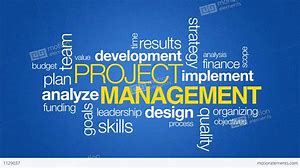
What is project management?
A project is a passing attempt to undertake unique objectives and try to achieve them, which is defined in terms of outcomes and benefits. A project could never be successful unless it achieves the objectives according to their accepted standards, within the agreed time and capital. How to differentiate project management from simple management is that project management has a dead-end and a lifespan, which should be delivered at a specific time with specific standards. Unlike management, which is an ongoing process. Professional project managers need a wide range of skills to achieve their goals, like technical skills, social skills and good business awareness.
To me, project management is all about starting a project and managing it at the right time, right place with the right skills and tools. If I became interested in managing a project and becoming a project manager, I’ll wait and research until I can be fully acknowledged about the matter, including what’s my responsibilities as a manager? What’s my actual role? What are the phases and methods to manage a project? These questions will be answered right in this blog.
Who is a project manager?
Project managers have a specific role and responsibilities to achieve their projects’ aim and goals. Project managers are also considered as top managers, they’re the ones who define and run the project, monitor the progress of the project and lead the team based on decided factors, like the type of project, the business’ needs and the expertise of the team members who are working alongside the project manager. They are also responsible for realizing what kind of project they are working on, so they need a various of wide ranged skills that will assist them to succeed in their project. Verbal and written communications is a must, every single project manager has to have these two skills, as well as leading and motivating the project delivery team members, good planning, time management and managing the risks, issues and changes on the project. The role of a project management goes beyond basic implementation of the project plan, so they need to have good relationships with customers and maintaining communications with stakeholders and the project organization.
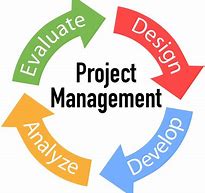
The 5 phases of project management
According to PMI, Project Management Institute, there are five important phases of project managements, and if they accomplish the roadmap of the five phases, the lifecycle will provide a high-level view of the project.
Project initiation is the first phase, and this is the beginning part of the project, and the target or the objective of this phase is to define the project at a broad level. This phase starts with a business case, where a manager will research and see whether the project is practical and if it should be started. The feasibility testing of the project will be done in this stage of the project and should be completed in this stage only. Stakeholders can put their thoughts into the project in this stage, whether it has a promising future or it’s doomed to failure. When it’s given the green light by the stakeholders, the project manager will start outlining the purpose and the requirements of the project, which should include the business needs, stakeholders and the business case.
Project planning is the second phase, this phase focuses on developing a map that all team members will follow, and this phase is considered the key to being a successful project manager. It starts with setting goals, and there are two popular methods for doing that by using S.M.A.R.T method and CLEAR.
S.M.A.R.T helps ensuring that the objectives and goals have been thoroughly examined and vetted. Also, it provides a road to visibly understand the implications of the process. S.M.A.R.T is short for to be specific; to set specific objectives. Be measurable, create standards that you can follow and measure the success of the objective. Be attainable, which means to identify the most important goals and what it will take to achieve them. Also, to be realistic and timely, is the last two parts of this method.
CLEAR method is a newer method for setting goals, which takes into consideration the environment of today’s business. In this phase, the project management plan is defined and developed, which means to identify the coast, quality, available resources and a realistic timetable.
Project execution, project monitoring and project closure is the last three important phases of the five phases.
AGILE project management 
Agile is a method of project managed that uses short development cycles to concentrate on constant improvement in the development of a product or service.
There are 12 principles of project management that guides agile today. Some of them are; customer satisfaction, which is the most important priority for project managers. A product or service is delivered in the best quality, and agility is focused on technical excellence and proper design. Agile was originally made for the software industry to develop the process of identifying issues. It now provides a way for project managers and their team members to deliver better products and services in the fastest way possible.
Agile provides the team members of the project including managers, consumers, and sponsors a lot specific benefits, such as flexibility and fast detection of problems and their solutions. The only drawback of the agile method is it’s not suited for all projects, and it might not work if team members were inexperienced or if the goal was blurry.
References:
Moira, Alexander. 2018. Agile project management: A comprehensive guide.
George Washington University, Jeff Thorn and Colleen Dixon. Choosing Just the Right Level of Project Management for Small Projects.
PMBOK. A Guide to the Project Management Book of Knowledge. Project Management Institute. Newton Square, PA. USA. 2000.
Barnes, Martin. 2015. “What is project management?”. APM.
Axelos, Global Best Practices, 2014. “What is project management?”. https://www.axelos.com/best-practice-solutions/prince2/what-is-project-management
 Atheer